PORSCHE 911912920 Porache Roof Top Skin Sunroof 911/912/930
fits make: Porsche. year: 1965–1989.
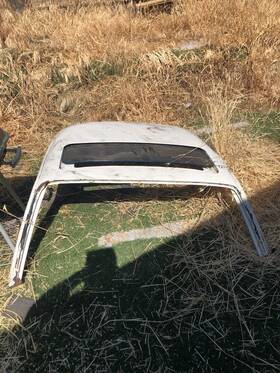
( Manufacturer Part Number: 911912920 ), ( Type: Sunroof ), ( Oe/oem Part Number: 930912911 ), ( Material: Steel ), ( Features: Durable ), ( Placement On Vehicle: Front )
Review PORSCHE Original Porache 911/912/930 Roof Top Skin Sunroof fits 911 1965–1989
The **Porsche 911 (912/930) Roof-Top Skin Sunroof Conversion** represents a rare and highly sought-after modification for one of the most iconic sports cars in automotive history. Originally introduced in the mid-1960s, the Porsche 911 s fixed hardtop design was a defining feature of its early generations, but enthusiasts and restorers soon discovered a way to transform it into a more practical and stylish open-air experience. The roof-top skin sunroof conversion often referred to as a "soft top" or "convertible" modification was pioneered by aftermarket specialists who adapted the engineering principles of the 911 s fixed roof into a retractable system, blending the car s classic lines with the freedom of an open-top driving experience.
This conversion typically involves the installation of a custom-fabricated, lightweight fiberglass or composite roof panel that replaces the original rigid steel hardtop. The new roof skin is designed to seamlessly integrate with the 911 s bodywork, maintaining the car s aerodynamic silhouette while allowing it to be fully retracted when desired. The mechanism often includes a manual or electric winch system, depending on the era and the specific model being modified, which pulls the roof back into a storage compartment behind the seats. For the **1965 1989 Porsche 911/912/930**, this modification is particularly appealing because it preserves the car s vintage character while adding a modern convenience that was not available in the original factory configurations.
The **912** and **930 (Turbo)** variants, in particular, benefit from this upgrade in distinct ways. The 912, with its air-cooled, flat-six engine and more relaxed driving dynamics, becomes even more engaging when exposed to the elements, allowing for a more immersive driving experience. Meanwhile, the **930 Turbo**, with its potent 3.3-liter engine and aggressive stance, gains a new level of presence when the roof is down, transforming it into a true open-air performance machine. The sunroof conversion also addresses practical concerns, such as ventilation and sun protection, without compromising the car s classic aesthetic.
For collectors and restorers, this modification is a testament to Porsche s enduring legacy of craftsmanship and innovation. While not an original factory option, the roof-top skin sunroof conversion is meticulously engineered to match the 911 s original design language, ensuring that the car retains its timeless appeal. The process often involves custom tailoring of the roof panel to fit the specific contours of the 911 s body, whether it be the **911 S (996)**, the **911 SC (993)**, or even the later **911 Turbo (996)** models. The result is a car that seamlessly blends vintage charm with contemporary functionality, making it a prized possession for those who appreciate both history and practicality.
Beyond its aesthetic and functional benefits, the roof-top skin sunroof conversion also enhances the driving experience by reducing wind noise and improving aerodynamics at higher speeds. This is particularly noticeable in the **930 Turbo**, where the added stability and reduced drag contribute to a more refined and controlled handling character. For enthusiasts who value both the heritage of the 911 and the joy of open-air motoring, this modification offers a unique way to experience the car in its most exhilarating form.
Whether installed on a **restored classic 911 (993)**, a **modernized 996**, or even a **rare 912**, the roof-top skin sunroof conversion is a sophisticated upgrade that elevates the car beyond its original specifications. It is a project that demands precision, expertise, and a deep appreciation for Porsche s engineering philosophy, making it a coveted enhancement for those who seek to push the boundaries of what their 911 can achieve. For the true aficionado, this modification is not just an accessory it is a celebration of the 911 s enduring spirit.
### **Pros and Cons of Buying a Porsche 911 (993, 996, 997) with a Removable Top (Targa or Cabriolet Conversion)**
#### **Pros**
1. **Classic Porsche Driving Experience**
The 911 remains one of the most desirable sports cars ever made, offering a perfect balance of handling, acceleration, and rear-engine driving dynamics. Even modern iterations retain the core 911 character, though with updated engineering.
2. **Strong Resale Value**
Porsche 911s, especially the 997 (2005 2012) and 991 (2012 2019), hold their value exceptionally well compared to most luxury or performance cars. A well-maintained example can retain 50% of its original value after a decade.
3. **Versatility of a Removable Top**
- **Targa (996/997):** Provides partial roof protection while still allowing open-air driving. The removable panel can be stored in the trunk, offering flexibility.
- **Cabriolet (997/991):** A full convertible experience with a soft or hardtop option. The 997 Cabriolet is particularly sought after for its blend of luxury and performance.
- Both configurations enhance the 911 s appeal for those who enjoy driving in different weather conditions.
4. **Engine Options and Performance**
- **996 (1999 2004):** Base models had the 3.6L flat-six (225 252 hp), but the **996 Turbo (996.2)** introduced a 3.6L twin-turbo engine (360 408 hp), making it one of the fastest 911s of its era.
- **997 (2005 2012):** The **997 Turbo (997.2)** featured a 3.6L twin-turbo engine (400 420 hp) and later the **997 GT3 (997.1)** with a naturally aspirated 3.8L (408 hp). The **997 PDK (2009 )** added a dual-clutch transmission for quicker shifts.
- **991 (2012 2019):** The **991 Turbo (991.2)** introduced a 3.8L twin-turbo engine (500 525 hp), while the **991 GT3 (991.1)** offered a naturally aspirated 4.0L (475 hp). The **991 PDK** refined gear changes further.
- **Fuel Efficiency Improvements:** Later models (especially 991) saw better fuel economy (15 20 MPG highway) compared to earlier generations.
5. **Luxury and Comfort**
- Modern 911s (997/991) feature high-quality interiors with leather, wood trim, and advanced driver aids (adaptive cruise, lane-keep assist, etc.).
- The **991 Cabriolet** and **997 Targa** offer a more refined open-air experience than older convertibles, with better wind noise reduction and stability.
6. **Aftermarket and Customization**
- The 911 has a vast aftermarket, allowing for engine upgrades (turbocharging, supercharging), suspension tuning, and aesthetic modifications.
- Companies like **Porsche Design, BBS, and Weber** offer high-quality parts for both performance and style.
7. **Reliability and Durability**
- With proper maintenance, a 911 can easily exceed **200,000 miles**. The 997 and 991 engines are robust, especially the turbocharged versions.
- Porsche s **Salon Service** and **Porsche Parts Care** programs help maintain value and reliability.
8. **Collectibility and Prestige**
- The 911 is a status symbol, and models like the **997 GT3 RS, 991 Turbo S, and 991 Cabriolet** are highly collectible.
- Owning a 911 with a removable top adds exclusivity, as these versions are less common than fixed-roof models.
---
#### **Cons**
1. **High Purchase Price**
- Even used examples command premium prices. A **997 Targa or Cabriolet** in good condition can cost **$80,000 $150,000 **, while a **991 Turbo S Cabriolet** may exceed **$200,000**.
- The **996** is the most affordable (base models start around **$30,000 $50,000**), but it lacks modern refinements and has higher maintenance costs.
2. **Maintenance and Repair Costs**
- Porsche parts and labor are expensive. A **997 Turbo** with a failed turbo or water pump can cost **$5,000 $10,000 ** to repair.
- **996 models** are particularly notorious for **water pump failures, oil leaks, and suspension wear**, requiring frequent attention.
- **991 models** are more reliable but still require **$1,500 $3,000/year** in maintenance if kept in top condition.
3. **Depreciation (Early Models)**
- The **996 (1999 2004)** is the least desirable generation due to its dated styling, poor aerodynamics, and reliability issues. It depreciates faster than the 997 or 991.
- Even the **997 (2005 2012)** has seen some depreciation in recent years due to newer models, though not as severely as the 996.
4. **Convertible-Specific Challenges**
- **Targa Models:**- The **996 Targa** has a **plastic rear panel** that can crack or warp over time.
- The **997 Targa** is more robust but still requires careful handling to avoid damage to the removable section.
- **Cabriolet Models:**- **Softtop durability** is a concern cheap aftermarket tops can fail, while OEM or high-quality replacements cost **$5,000 $10,000**.
- **Wind noise** is more pronounced than in fixed-roof models, especially at high speeds.
- **Storage space** is reduced compared to fixed-roof versions due to the folded top.
5. **Fuel and Insurance Costs**
- **Turbocharged models** (especially 997 Turbo/991 Turbo) consume **12 16 MPG**, making fuel costs higher than a non-turbo 911.
- **Insurance premiums** for a 911 (especially a high-performance or collectible version) can be **$2,000 $5,000/year**, depending on age, location, and coverage.
6. **Driving Experience Trade-offs**
- **Convertibles are less stable** at high speeds due to wind forces, requiring more driver engagement.
- **Targa models** still have a fixed rear window, which can be less enjoyable than a full convertible.
- **996 models** feel dated in handling and ride quality compared to later generations.
7. **Market Saturation and Competition**
- The **991 (2012 2019)** is now aging, and newer **992 (2019 present)** models are entering the used market, potentially reducing demand for older 911s.
- Competitors like the **Audi R8, BMW M6, and Mercedes AMG GT** offer similar performance and luxury at sometimes lower prices.
8. **Environmental and Practicality Concerns**
- **High emissions** (especially turbo models) may limit use in strict emissions zones.
- **Parking and storage** can be challenging due to the car s size and weight.
- **Not ideal for daily driving** unless you enjoy high maintenance and expense.
---
### **Conclusion and Recommendation**
#### **Best Choice Based on Needs:**1. **For Enthusiasts Who Want a Balance of Performance and Practicality (Best Overall Pick)**
- **Porsche 997 Targa (2005 2012)**
- **Pros:** Refined handling, strong engine options (Turbo, GT3), good resale value, removable rear panel for open-air driving.
- **Cons:** Some reliability quirks (water pumps, suspension), higher maintenance than a 991.
- **Budget:** **$50,000 $90,000** (depending on mileage and condition).
- **Why?** The 997 is the last true "classic" 911 before the 991 s modern updates. It offers a great mix of nostalgia and practicality.
2. **For Those Who Prioritize Luxury and Modern Refinement**
- **Porsche 991 Cabriolet (2
Details:
PORSCHE 911/930/912/912E.
part #: 911912920 price
- $3000.00
specifications sunroofconverti:
- for makes: Porsche
- for years: 1965-1989
- mpn: 911912920
- type: Sunroof
- oe/oem part number: 930912911
- material: Steel
- features: Durable
- placement on vehicle: Front
returns sunroofconverti:
- policy: No Returns
offer sunroofconverti:
- started: March 5, 2026
- sold: 0
- quantity: 1
- options: Ship-to-home
- availability: In Stock
- best offers: True
general sunroofconverti:
- Exterior Parts Accessories > Roofs, Tops Sunroofs > Sunroofs Parts
- condition: Used
seller sunroofconverti:
- # reviews: 248
- rating: 98.0%
- city: Fairfield, California
shipping sunroofconverti:
- type: Fixed
- carrier: USPS
- class: Standard
- transit: 7-11 Days
- service: USPS Ground Advantage
- cost: $1000.00
payments sunroofconverti:
- wallet: Paypal
- credit card: Visa
- other
Porsche 911912920 Is Similar To:
- 0390200017 Porsche Cayenne Gts Sunroof (33.1% similar) ...(December 24th, 2017)
- 0911 German Auto Tops Porsche Carrera To Convertible Top Blue Original (23.5% similar) ...(October 27th, 2018)
- 114x077 North American Custom Covers Porsche Boxster Soft Top Roof Protector (25.2% similar) The cover is secured to your vehicle using doors and trunk, cannot be removed without opening car. To view our fitting instructions a high-quality, in-stock, custom-fit soft-top cover - purchase yours today. Porsche boaster 987 soft top roof cover to 2012 . Made from a poly-urethane-coated woven ...(May 29th, 2018)
- 114x083 North American Custom Covers Porsche Boxster Soft Top Roof Protector (25.2% similar) Made from a poly-urethane-coated woven polyester, it is totally waterproof providing complete protection the outside elements. Tailor-made soft-top roof cover, designed for the porsche boaster 987. To view our fitting instructions a high-quality, in-stock, custom-fit soft-top cover - purchase yours ...(May 29th, 2018)
- 03 02 04 39600 01 Soft 00 Assy Boot 97 Boxster Cover Roof 98 Porsche 99 Top (17.7% similar) Compatibility described in this listing is guaranteed. The quote you see is a total for shipping and handling. For items damaged in transit we ask you to take a photo of the item and the package and immediately. And it is added to shipping cost...(March 9th, 2015)
- 01 39601 Top Porsche Roof 98 Black Boxster Soft Oem 97 00 99 02 Assy (23.8% similar) Compatibility described in this listing is guaranteed. And it is added to shipping cost. For items damaged in transit we ask you to take a photo of the item and the package and immediately. The quote you see is a total for shipping and handling. Can be shipped to commercial addresses only...(March 9th, 2015)
- 477871651 Porsche 924 944 Sunroof (34.5% similar) Fits 76'-88 924'S. This offer is for the following item: 2x black porsche sunroof latch bracket striker retainer plate part take a look at pictures. Also fits most 944 model's but check the part to be certain. Shipping is included in the offer price...(July 8th, 2017)
- Wedge 82 Sun Roof Front 84 Centering 383 944 85 477871651ahpo 83 Porsche (9% similar) Please do your research to make sure these parts fit your year. Porsche front centering wedge sun roof 477871651AHPO 383ITEM is in good used condition, some sun fading, not cracked or broken, see pics, part was pulled from a 1983 porsche 944 and fits other model's as well...(March 11th, 2015)
- 490566828 Rockwell Golde Porsche Sunroof Transmission Motor (21.1% similar) Genuine parts and all of the top brands, such as , Mahler, ate, Mopar, gm, AcDelco, Moog, champion many others. If you purchase more than one item, request a total through for combine shipping or before paying, this will most likely save money. Local pick-ups are preferred on items especially larger...(January 8th, 2019)
- Porsche 901 912 911 L S T E Targa Top Roof Frame Cover Latches 911l 911s 911e 51313 (30.1% similar) For sale is a used porsche 911 or 912 removable Tara top. The top is in poor condition and will need to be reconditioned. The middle hinge is broke and the pins are loose as shown in the pictures. All others please with zip code for shipping quote. Stock this was removed from a 1967 porsche 911 ...(September 17th, 2016)
- 644 503 051 56 Porsche Nos Outer Roof Panel Sun Frame Coupe Top Sunroof (36.4% similar) For sale is a nos or new old stock porsche 356 t6 coupe sun roof type panel. All others please with zip code for shipping quote. This item has never been installed on a vehicle and in storage for over 40 years...(June 2nd, 2018)
